
How to Bleed a Radiator Safely: A Simple Step-by-Step Guide
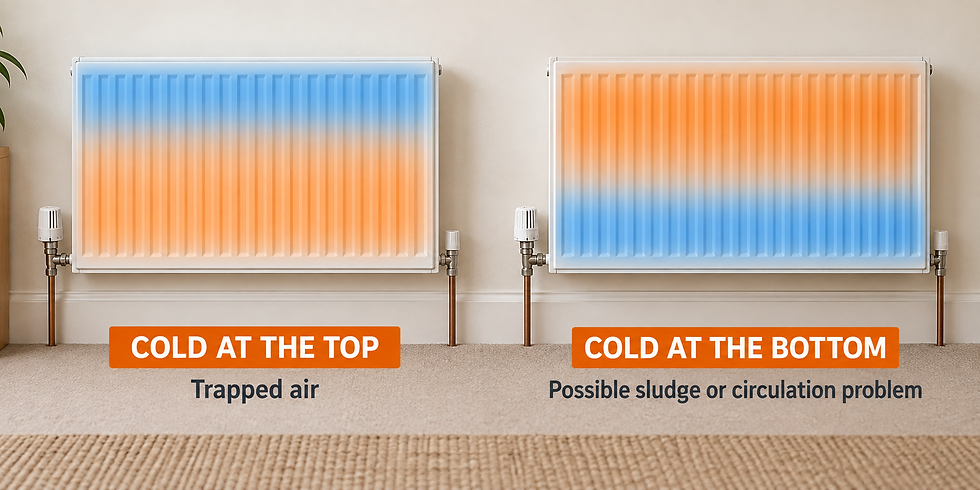
If a radiator is cold at the top but warm lower down, trapped air may be preventing it from heating properly. Bleeding the radiator releases that air and is a straightforward job that many homeowners can do safely with a radiator key and a cloth.
Before reaching for the radiator key, it is important to identify the problem correctly. A radiator that is cold at the bottom is more likely to have a circulation or sludge problem, and bleeding it probably won’t solve the issue.
What Does a Cold Radiator Tell You?
Cold at the top but warm lower down:
Trapped air is the likely cause.
Cold at the bottom but warm at the top:
This may indicate sludge or poor circulation
Cold all over:
Check that both radiator valves are open. If other radiators are also cold, there may be a problem with the heating controls, boiler or system circulation.
What You Will Need
A radiator bleed key
A large cloth or old towel
A small bowl or container to catch any water
Access to the boiler pressure gauge and filling loop, if you have a sealed heating system
Safety first: Radiators and the water inside them can become very hot. Always switch the heating off and allow the radiators to cool before opening a bleed valve.
How to Bleed a Radiator
Step 1: Check Which Radiators Need Attention
Turn the central heating on and allow the radiators to reach their normal temperature. Carefully check each radiator to see whether it feels warm across the whole surface. Be cautious, as radiators can become very hot. Make a note of any that remain cold at the top while warming normally lower down.
Step 2: Switch the Heating Off
Switch the central heating off and allow the radiators to cool completely. This prevents very hot water from escaping and also allows the air to settle at the top of the radiator.
Step 3: Find the Bleed Valve
The bleed valve is normally found at one of the top corners of the radiator. Place your cloth and small container underneath it before inserting the radiator key. Do not remove the valve completely.
Step 4: Release the Trapped Air
Hold the cloth around the bleed valve and slowly turn the radiator key anticlockwise. A quarter turn is normally enough. You should hear a hissing sound as the trapped air escapes.
When the hissing stops and a steady trickle of water appears, turn the key clockwise to close the valve. Close it gently, it only needs to be secure, not overtightened.

Step 5: Repeat Where Necessary
Repeat the process on each radiator that you identified as being cold at the top. Wipe away any water and check that every bleed valve has been closed properly.
Check the System Pressure
Bleeding radiators releases a small amount of water as well as air, so the system pressure may need checking afterwards.
Open-Vented Heating Systems
If your heating system has a small feed-and-expansion tank in the loft with a ball valve, it should replace the lost water automatically. No manual pressure adjustment is normally required.
Sealed Heating Systems
If your system has a pressure gauge, check it while the heating is cold. This maybe on the boiler, or in the case of a pressurised system with a hot water cylinder, in the airing cupboard.
Most sealed systems should normally be around 1 to 1.5 bar when cold, although you should follow the instructions for your particular boiler.
If the pressure is too low, use the filling loop to top it up slowly, then close the filling-loop valves fully. Do not overfill the system. If you are unsure how to do this, check the boiler instructions or contact a heating engineer.
Turn the Heating Back On
Once all the bleed valves are closed and the system pressure is correct, turn the heating back on. Allow the radiators to warm up and check that they now heat evenly. Also check around each bleed valve for any signs of water.
Check the pressure again later when the system has cooled. If it has dropped below the recommended level, top it up again carefully.
When to Call a Heating Engineer
Air keeps returning to the radiators
The boiler pressure repeatedly drops
A radiator remains cold after bleeding
Radiators are cold or patchy at the bottom
A bleed valve leaks or will not close properly
You are unsure how to repressurise the system safely
If something doesn’t look right, don’t force it. SJL Heating & Plumbing can investigate radiator, circulation and boiler-pressure problems throughout Buckshaw Village, Euxton, Chorley, Leyland, Preston and the surrounding areas. We’ll explain what is happening clearly and recommend only the work that is genuinely needed.
Comments